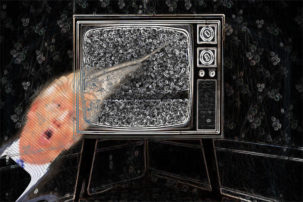
President Trump has been accused of bending the rules of objectivity in reporting and journalism to reflect his own viewpoints and bias. While there is certainly multiple examples of the current president exerting a slant on the news that he wishes to project, I don’t think we can call this new, but only an acceleration of a trend that has been occurring for 25 years if not longer. In fact the idea of objective journalism is a fairly new concept and that notion that we can be objective and not partial in our view of anything is naive at best and historically inaccurate at worst. The New York Times, often a target of Trump’s rhetoric reported as much in 2016. The Times’ Jim Rutenberg wrote, “If you view a Trump presidency as something that’s potentially dangerous, then your reporting is going to reflect that. You would move closer than you’ve ever been to being oppositional. That’s uncomfortable and uncharted territory for every mainstream, nonopinion journalist I’ve ever known, and by normal standards, untenable.” What Rutenberg is contending is that journalism should ostensibly be objective. Yet in the age of Trump, even before his election, the supposedly objective journalists were being forced into an oppositional model. But really is an non-objective. oppositional role for journalists or media even new? Nixon, FDR. Clinton, all had wildly oppositional press coverage.
However, this quality of objectivity has been slipping and actually doesn’t seem very valuable to audiences in postmodern times. It may be that objectivity is taking a back seat to the personalization of the news. Perhaps this is a symptom of the personalized television of the reality television era. The Bachelor, Survivor, Project Runway all seem to mirror our individual desires to win, get-ahead ,and succeed. This is an era that I have written about in my book, The Bizarre World of Reality TV. Blame it on the internet? Partially. What has been occurring in recent years is the ability for individuals to tailor their news feeds to resemble the world they want to see. Communication researcher George Gerbner, from the Annenberg School For Communication at the University of Pennsylvania referred to the ‘mean world syndrome’ in his research that he conducted on what he called ‘cultivation theory.’ That is by repeatedly indulging in the same negative media again and again elderly people could inculcate in themselves a view of the world that was shaped by television broadcasts of crime, corruption, and danger that could convince these, mostly shut-in individuals, that the world was a mean and dangerous place. Gerbner and his fellow researchers wrote that, “the ‘facts’ of the television world are evidently learned quite well whether or not the viewers profess a belief in what they see on television or claim to be able to distinguished between factual and fictional presentations.” (52) However Gerbner and his colleagues seemed to think that viewers garble the images and ideas and translate it into a salient view of a hostile world whether the world is indeed hostile or not. The Media Education Foundation and other reputable sources have reported on the phenomenon and most have gone unheeded. Michael Morgan, Speaking for the MEF described the situation as, “with every change of the channel we are likely to see the most banal content, alternating with the most bizarre and violent & frightening. So that what would be shocking in our real lives, in the media world comes to seem normal and mundane–reinforcing the sense that the world is a place of constant danger and threat. A world of psychotic killers.”
It is likely that people can construct whole world views from information they see online. Rather than Gerbner’s mean world view, young people can have their total world view shaped by social media, generally with little regard for its accuracy. The American Press Institute said that people getting news online were skeptical of news they read, but little factors like loading speeds and lack of annoying ads can make people more ready to accept a source. An American Press Institute Study from 2016 described the reception of news as conditioned by many factors when users were receiving news online. They wrote, “with digital news and information, women also place more importance than men on fast loading speeds (67 percent vs. 59 percent), working well on a mobile phone (66 percent vs. 53 percent), and little interference from ads (69 percent vs. 58 percent).” So for some viewers fast loading, working on a phone, and freedom from ads might be just as important as accuracy or believe-ability. That is accessibility trumps (no pun intended) objectivity. And teachers wonder why their students prefer the dubious reports of Wikipedia to scholarly databases? Consider the issue that such sources are widely accessible.
Finally, the danger is that people can construct an entire world view from non-objective material either personally selected and screened or progressively screened by one’s media habits. Tomas Chamorro- Premuzic writing for The Guardian in 2014 explained that, “Paul Resnick and colleagues at the University of Michigan’s School of Information recently noted that ‘collectively, these filters will isolate people in information bubbles only partly of their own choosing, and the inaccurate beliefs they form as a result may be difficult to correct.’ ” So we could be living in a world in which not President Trump but EVERYONE is transitionally heading towards existence in a news bubble of their own creation and customization. With smart search engines like Amazon’s and Google’s engines only guiding us to sites they think we want to see, the problem of non-objective news may only get worse.